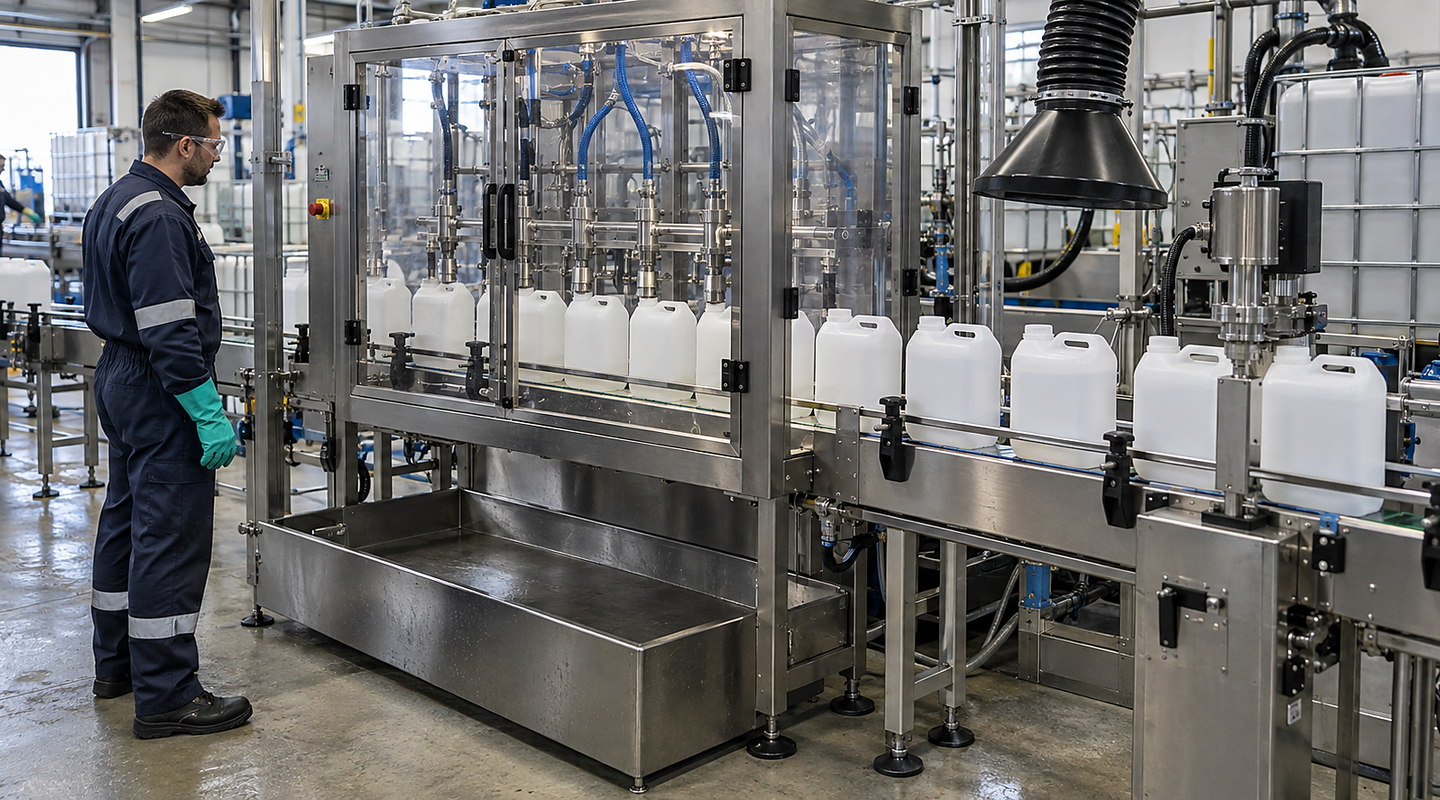
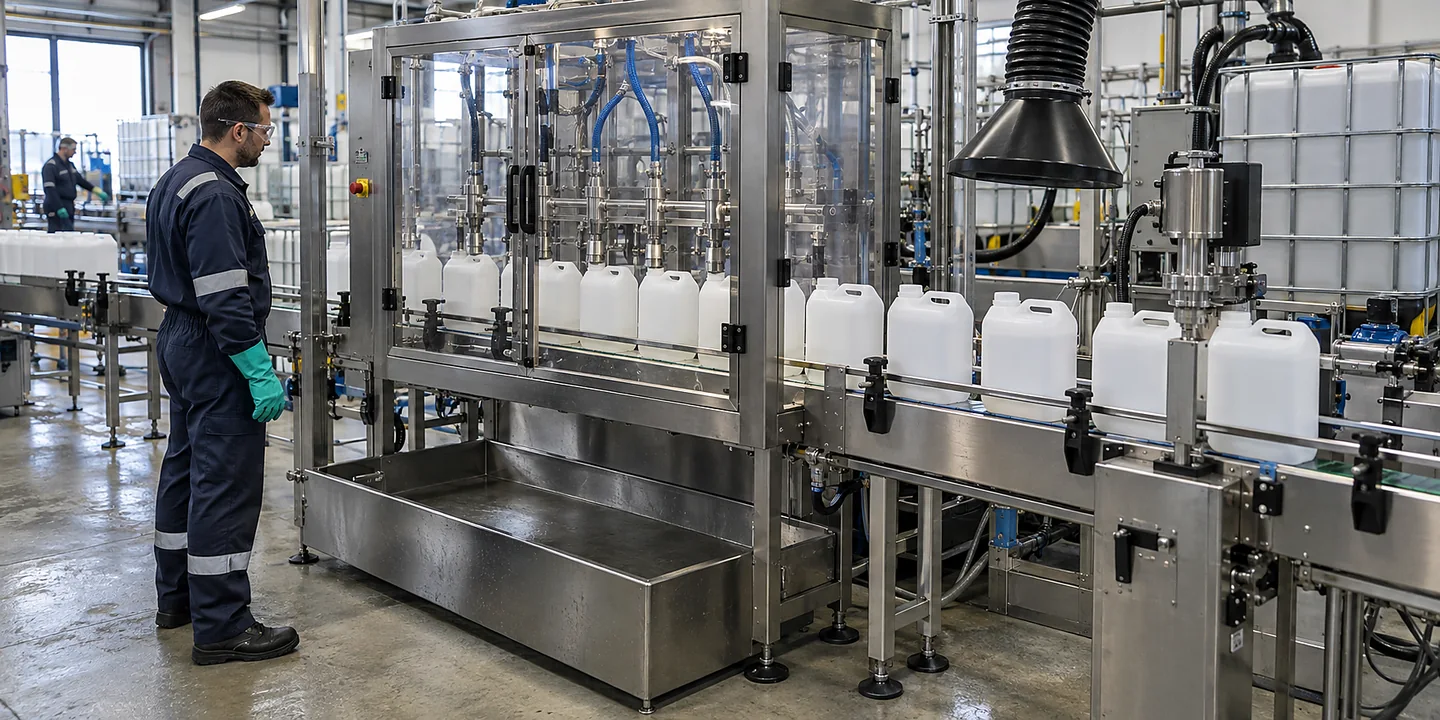
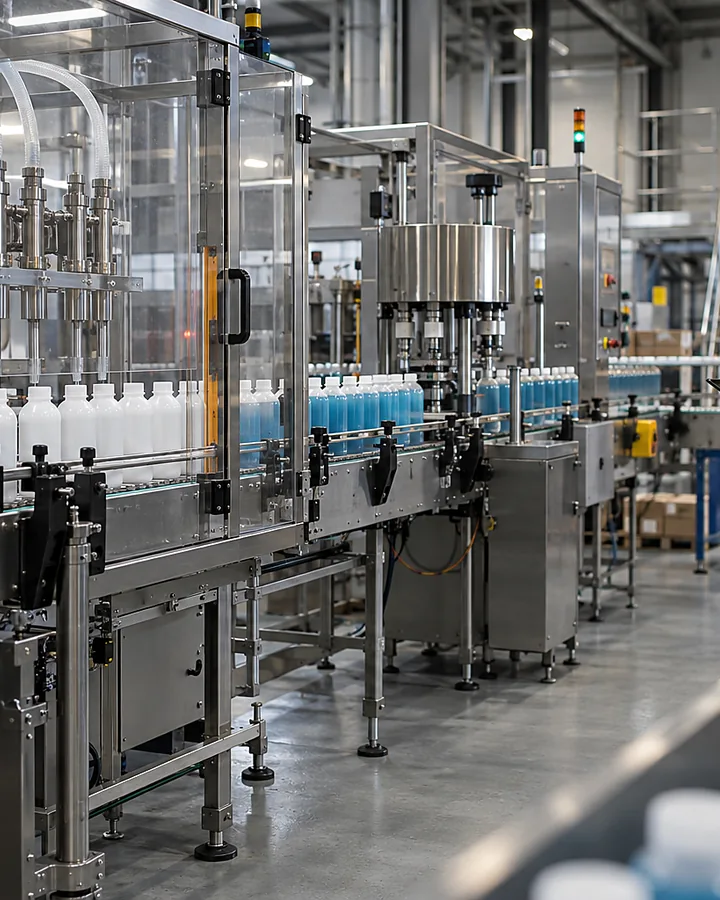
Specify lubricating-oil and grease filling using representative product at its intended filling conditions, the container range and target fill. Review presentation, dosing, closing, cleaning and changeovers as one process. Compare concepts against samples and agreed finished-pack checks rather than assuming one method suits every lubricant.
Speak directly with Lancing about lubricating-oil and grease filling.
Quick answer
How do we select a filler for our lubricant viscosity and container size?
Provide lubricant data across the expected filling temperatures and identify bottle, can or drum formats. Include the target quantity, foaming or stringing observations and product changes. Trial the proposed pump or dosing arrangement, nozzle cut-off and cleaning sequence before agreeing the filling and container-handling scope.
Choose the lubricant filling method around the real product state
A lubricating oil and a grease can need very different product-feed and dosing arrangements. Use the formulation, handling condition and container range to define the application before comparing machine configurations.
Decision 1
Record viscosity at the filling condition
Provide product data at the expected temperature range and describe how long material may stand before filling. Include observed changes between cold startup and steady production. A viscosity value without its measurement condition can be misleading. For grease or other non-free-flowing material, review how product reaches the dosing unit rather than assuming gravity feed will be adequate.
Decision 2
Decide whether the target is weight or volume
State the required commercial quantity and the method used to verify finished packs. A volumetric setting and a net-mass result are not interchangeable without considering product density and conditions. Compare appropriate pump, piston or weighing arrangements against the same target. Agree the trial sampling method rather than accepting an unspecified claim of accuracy.
Decision 3
Control foam, drips and stringing
Observe how the product behaves during startup, high-flow filling, nozzle withdrawal and a pause. Foaming may change usable headspace, while stringing or drips can contaminate the neck or pack exterior. Trial the proposed nozzle and cut-off with actual containers. The acceptable result should include a clean closing area and manageable discharge, not only the correct nominal quantity.
Decision 4
Assess bottles, cans and larger containers separately
Provide neck openings, height, stability, handles and the smallest and largest fills. A large fill in a narrow-neck bottle has different access and cycle constraints from an open container. Identify manual lifting and support tasks as well as automated transfer. Ask which formats need change parts and which lie outside the proposed filling arrangement.
Decision 5
Plan grade changes and product recovery
List incompatible grades, colours or additives and the allowed carryover defined by the product owner. Review retained liquid in tanks, pumps, hoses and nozzles. Compare draining, cleaning and dedicated-contact-part options for the actual campaign pattern. Include the time and checks needed to release the next lubricant so frequent changes are visible in the production comparison.
Decision 6
Prove the line with representative runs
Supply product safety and technical data for material compatibility and installation review. A useful trial includes the difficult product, a refill, a stop and restart, and the agreed container changes. Record fill results, external cleanliness, accepted output and interventions. Closing, labelling and downstream handling should be included where they determine whether the filled pack is usable.
Your route from an initial enquiry to a working solution
You can review decisions about cleaning, access and changeover method and finished-pack checks and reject handling at each stage.
01
Review Representative Product and Pack Samples
Share representative product and pack samples, including the normal range for lubricating-oil & grease filling product behaviour and the difficult container, bag or pack range cases.
02
Trial the Dosing, Handling or Closing Method
Compare suitable methods and use focused trials to show how each option performs against target dose, count or pack weight.
03
Integrate Infeed, Discharge, Controls and Access
Connect the equipment to your line, services and controls while resolving required output and production pattern for day-to-day operation.
04
Run Agreed Production and Changeover Checks
Confirm cleaning, access and changeover method, then complete and record finished-pack checks and reject handling before your operating team takes over.
Important limits
Know what needs a separate check
Chemical compatibility, vapour, dust and hazardous-area duties require substance-specific assessment.
The selected method must be trialled with representative product and packaging.
Supplier tolerances and product-condition changes can alter handling or fill behaviour.
Your final solution for lubricating-oil and grease filling must reflect the law, current standards and site-specific risks that apply to your installation.