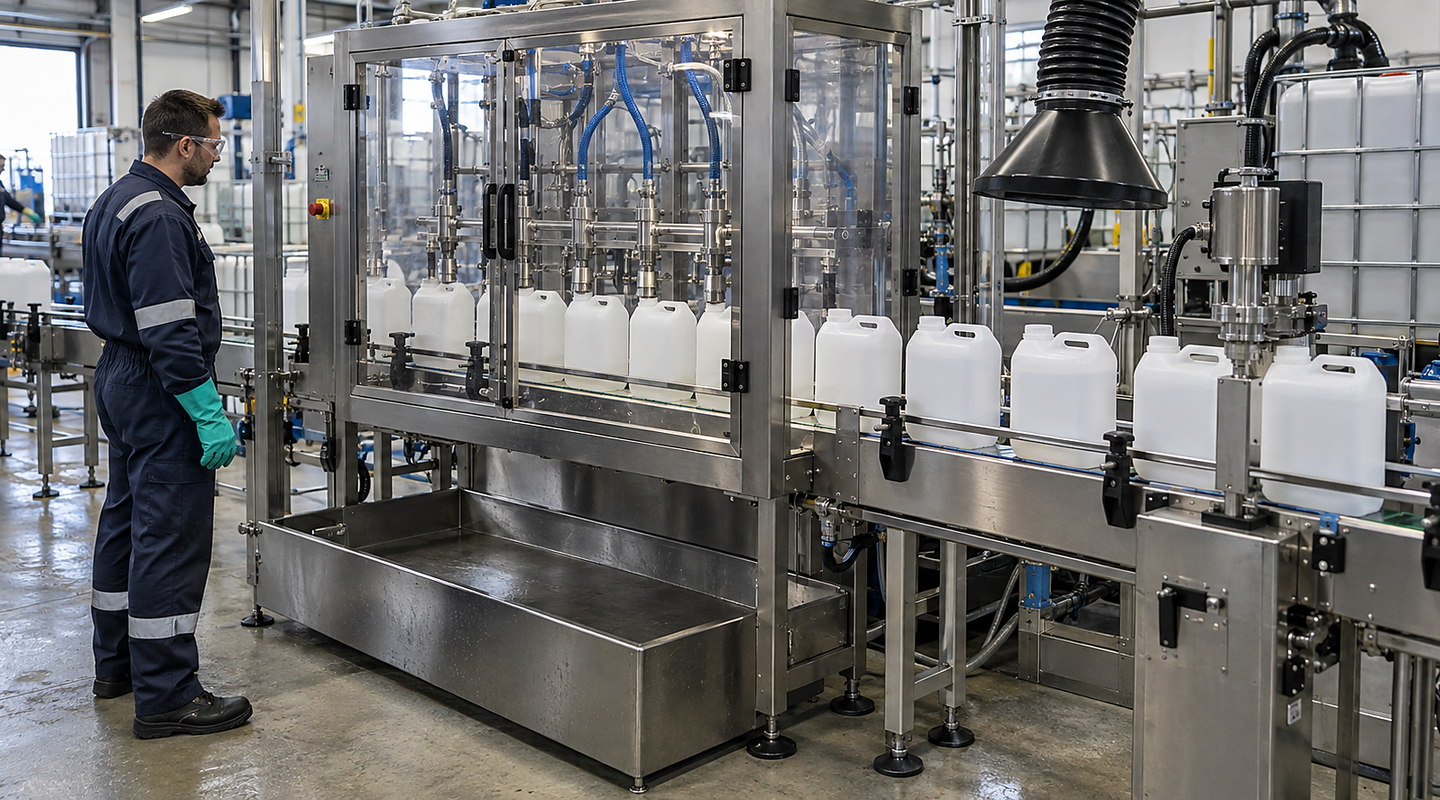
Select lubricant filling equipment for the real product state
Choose lubricant filling equipment by comparing the oil or grease at its intended filling conditions, the container range, target quantity, output and changeover requirements.
Compare lubricant-filling concepts with representative oils or greases and containers from the intended range. Check product behaviour, fill consistency, presentation, cleaning and changeovers at the planned operating conditions. Agree the accepted finished-pack result and output before confirming a dosing method.
For routine production using lubricating-oil and grease filling, a short trial that reproduces the difficult condition is often more useful than a long list of nominal specifications.
Compare options in the conditions where they must work — Lubricant Filling Machines
Plan lubricant filling machines around your product, pack range, target output, cleaning needs and finished-pack checks. Discuss a practical line concept with Lancing using representative samples. A useful shortlist should show how every option copes with lubricating-oil & grease filling product behaviour and cleaning, access and changeover method.
Discuss your application
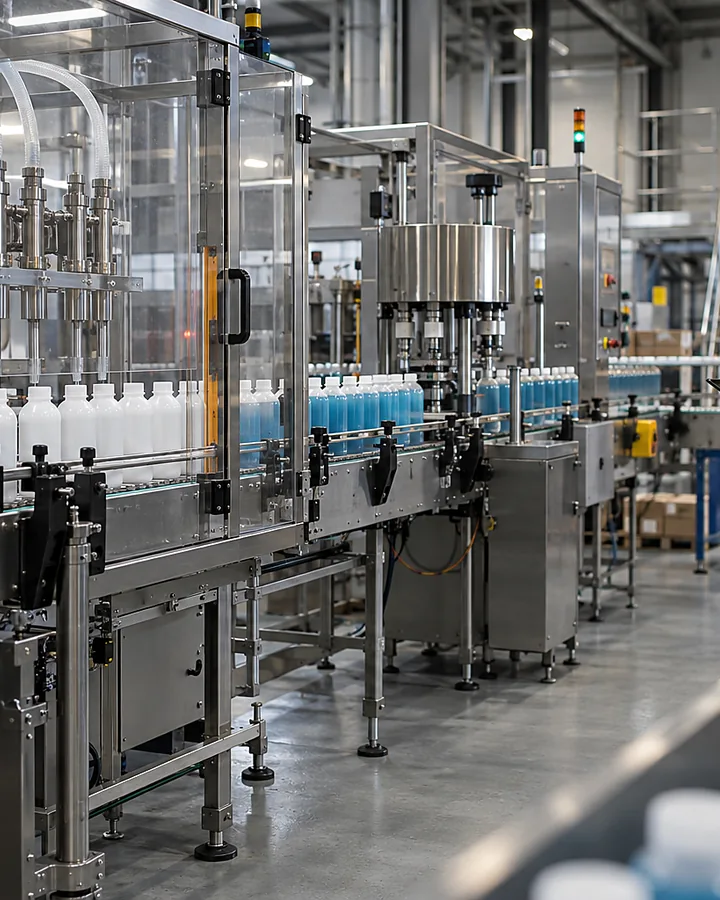
Separate product delivery from dose control
A dosing unit cannot perform consistently if the product supply changes unpredictably. Describe how lubricant reaches the filler: vessel, drum or other source, transfer distance, product level and intended operating condition. Include the coldest expected start and the condition after a normal production pause.
Oils and greases need different comparisons
Do not use a thin oil demonstration as proof that a grease or heavily structured product will feed through the same system. Assess the complete product passage, replenishment method and retained material. State any permitted conditioning or mixing method rather than assuming the product can simply be warmed or agitated.
Compare the dose range with the container range
A small bottle and a large container may impose different requirements on dosing time, nozzle access and support. Ask which components and settings change across the range and how the first fill is checked after changeover. Assess the complete accepted-container rate, including positioning and removal.
Judge cut-off after the nozzle moves
Observe dripping or stringing during withdrawal, indexing and the move to closing. Product on a neck, sealing face or label area is a separate failure from dose quantity. Compare the cut-off arrangement with the actual lubricant and container opening.
Use the failure pattern to focus a trial
- Fills decrease as the source empties: check delivery conditions and whether the dosing unit fully replenishes.
- First fills differ after a pause: record product condition and the defined restart sequence.
- One position differs from others: compare that product path and nozzle before altering the whole line.
- Quantity passes but packs are dirty: review withdrawal, cut-off and transfer separately.
For changes between lubricants, define the acceptable carryover and how the product path is emptied and cleaned. Provide substance information for contact-material, vapour and site-risk review; a pump's dosing capability does not establish suitability for every lubricant or production area.
Record the complete duty in the lubricant filling checklist before comparing a proposed arrangement.
Pause before choosing when…
- Only perfect or hand-selected examples of routine production using lubricating-oil and grease filling are available.
- No one has defined how finished-pack checks and reject handling will be evaluated.
- The normal range for lubricating-oil & grease filling product behaviour is described only as “usually fine” but has not been bounded.
- Your operator, cleaning, maintenance or recovery access has not been considered.
- Quoted performance depends on another machine or data source that is not included.