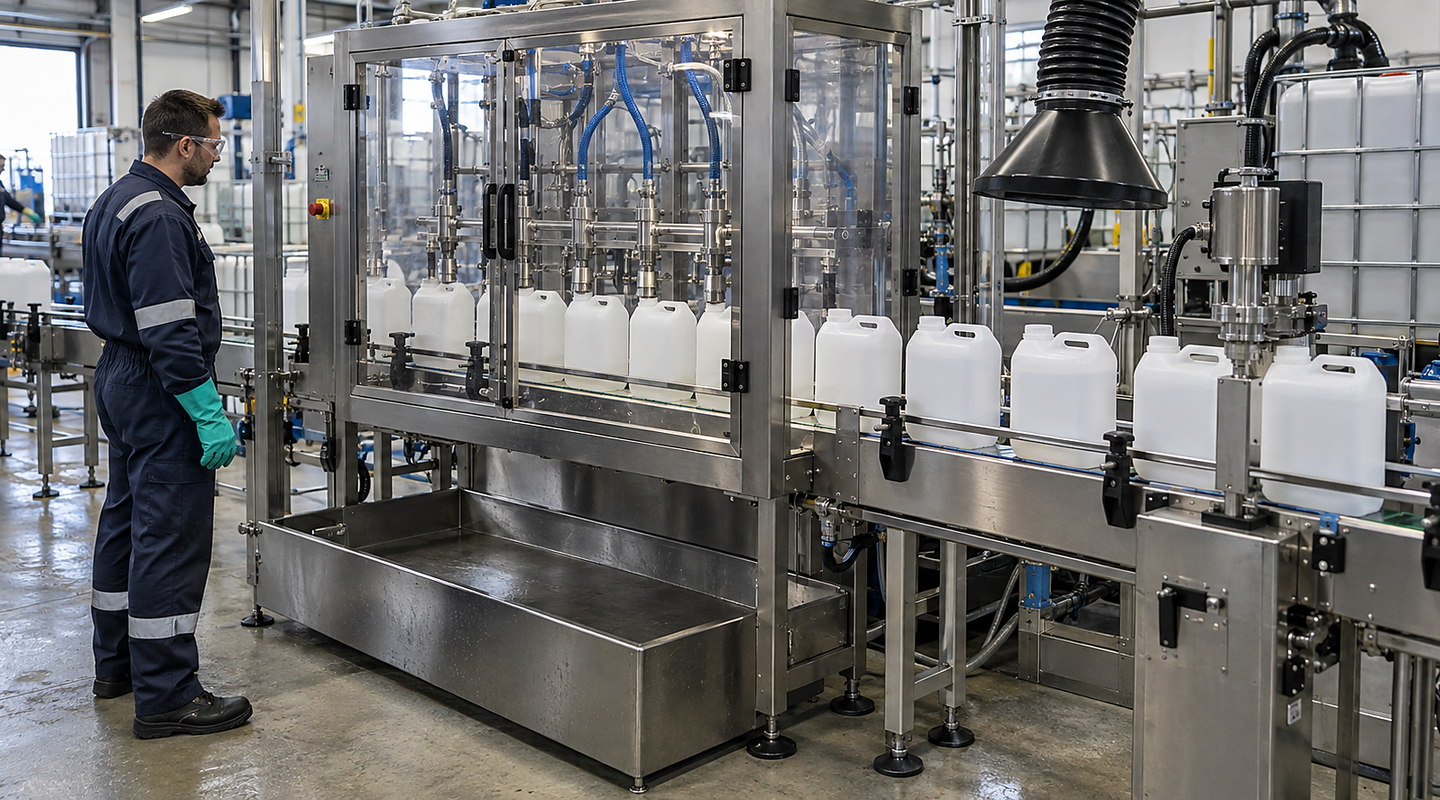
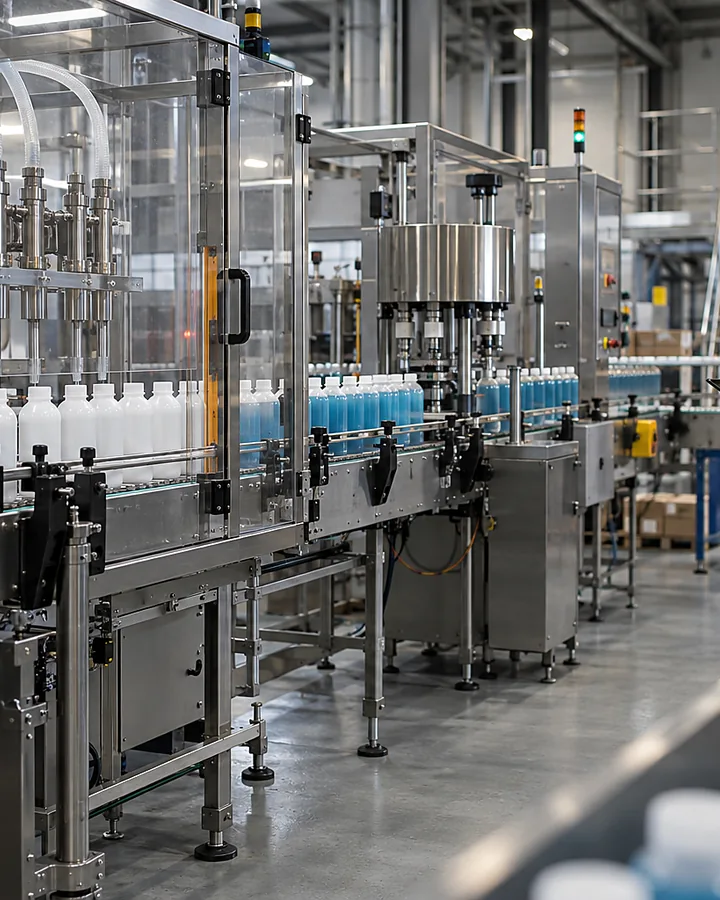
Record lubricant grade, viscosity and filling temperature, cold-start/standing behaviour, product supply, containers, foam/stringing and individual fill and cleanliness results.
In brief
Identify each lubricant grade and batch with its viscosity, filling temperature and measurement condition. Record behaviour after standing, at cold start and during normal running, linking the actual product supply to the container and target mass or volume. Observe foam, drips/stringing, nozzle withdrawal and neck or exterior cleanliness.
Follow the product-to-finished-pack sequence and retain the individual trial results. Keep technical and safety information with the samples. Product conditioning, compatibility and any grade carryover limit need agreement for the actual substance; they cannot be inferred from a generic filling demonstration.
On the production floor
Turn your production information into clearer decisions — Lubricant Filling Machines
Plan lubricant filling machines around your product, pack range, target output, cleaning needs and finished-pack checks. Discuss a practical line concept with Lancing using representative samples. Use this guide to resolve lubricating-oil & grease filling product behaviour before it limits the final system.
Lubricating-Oil & Grease Filling Product Behaviour: condition, range and effect on your process
Current condition
Identify lubricant grade/batch, viscosity with temperature and measurement condition, target mass or volume and relevant density conditions. Record vessel/drum supply, transfer distance, product level, container support and individual fill/cleanliness observations.
Realistic range
Include cold start, standing and normal running, intended lubricant grades and actual bottle/can/drum extremes. Represent refill, pause/restart and the difficult format or grade change, stating products or conditions outside the trial.
Effect on the system
Observe product delivery separately from dosing, plus container/nozzle access, foam, drips/stringing and clean necks/exteriors. Record accepted output, interventions and cleaning/carryover decisions, with the agreed fault response and unresolved actions.
Before you contact us
Five questions about lubricating-oil & grease filling product behaviour for your application
Who can confirm this information?Identify product, production/quality and engineering owners for lubricant condition, target quantity, compatibility information, grade carryover and retained trial records.
How representative is the sample?Use identified production lubricant grades/batches at the actual filling condition, with normal containers and product supply; include relevant cold-start and standing behaviour.
What is the difficult condition?Include viscous or non-free-flowing product where intended, refill, pause/restart, foam/drips/stringing, difficult nozzle access and the hardest container or grade change.
How will you judge the result?Agree individual quantity measurement and neck/exterior checks before running. Retain actual conditions, accepted/failed packs, interventions, cleaning/changeover observations and discrepancies.
What else must be coordinated?Coordinate supply, dosing, container support/nozzle access, closing/labelling, operator/lifting tasks and cleaning or dedicated contact parts, with substance-specific safety and compatibility responsibilities.
Connected details
Review lubricating-oil & grease filling product behaviour as part of the complete system
For Lubricating-Oil & Grease Filling Product Behaviour: Product and pack trial guide, describe the current position, required outcome, acceptable limits and known exceptions for lubricating-oil & grease filling product behaviour. That lets us compare options against your real production rather than one nominal value.
Question 2
Container, Bag or Pack Range
For Lubricating-Oil & Grease Filling Product Behaviour: Product and pack trial guide, describe the current position, required outcome, acceptable limits and known exceptions for container, bag or pack range. That lets us compare options against your real production rather than one nominal value.
Question 3
Target Dose, Count or Pack Weight
For Lubricating-Oil & Grease Filling Product Behaviour: Product and pack trial guide, describe the current position, required outcome, acceptable limits and known exceptions for target dose, count or pack weight. That lets us compare options against your real production rather than one nominal value.
Question 4
Required Output and Production Pattern
For Lubricating-Oil & Grease Filling Product Behaviour: Product and pack trial guide, describe the current position, required outcome, acceptable limits and known exceptions for required output and production pattern. That lets us compare options against your real production rather than one nominal value.
Question 5
Cleaning, Access and Changeover Method
For Lubricating-Oil & Grease Filling Product Behaviour: Product and pack trial guide, describe the current position, required outcome, acceptable limits and known exceptions for cleaning, access and changeover method. That lets us compare options against your real production rather than one nominal value.
Question 6
Finished-Pack Checks and Reject Handling
For Lubricating-Oil & Grease Filling Product Behaviour: Product and pack trial guide, describe the current position, required outcome, acceptable limits and known exceptions for finished-pack checks and reject handling. That lets us compare options against your real production rather than one nominal value.