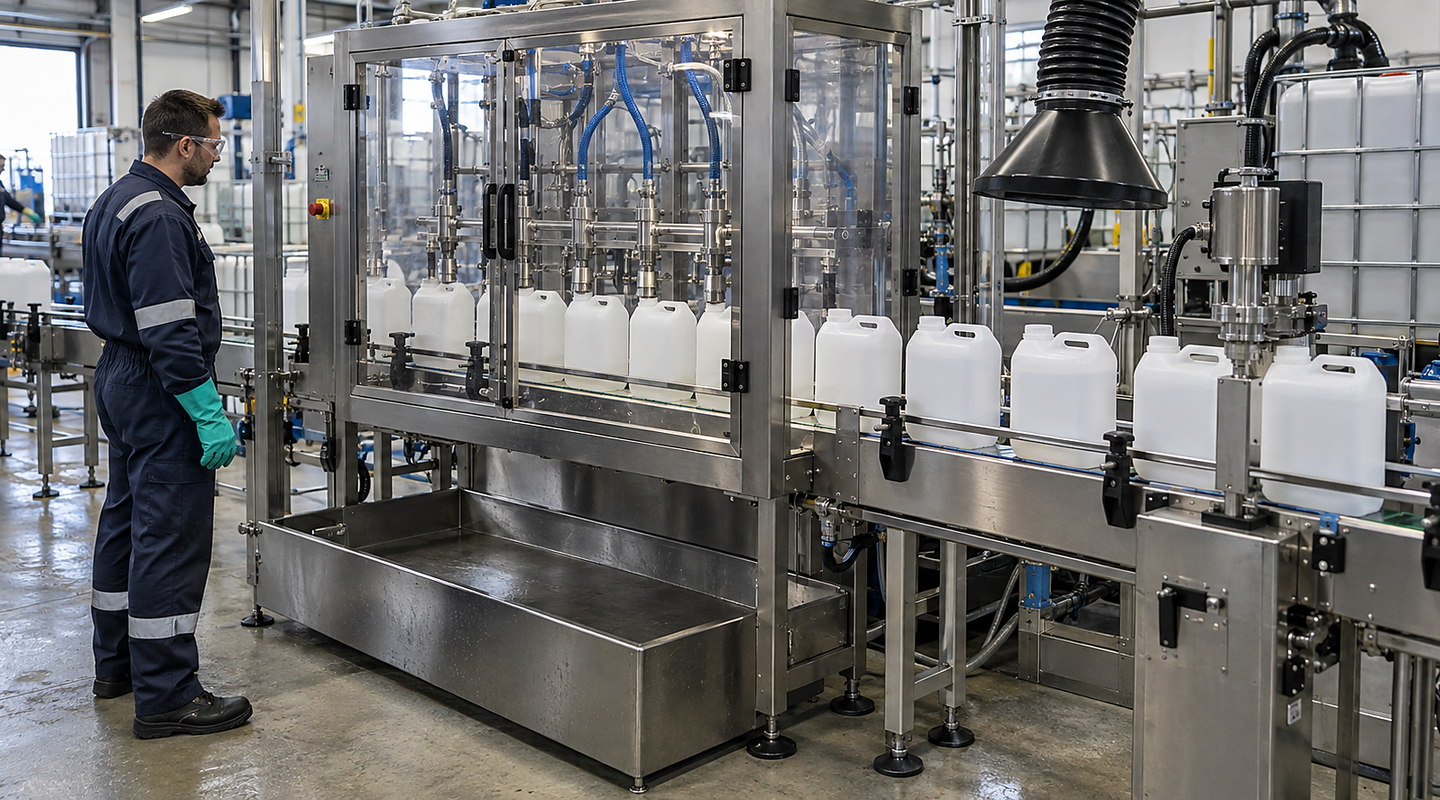
Lubricant Filling Machines: How the Process Works
Follow lubricant filling from identified oil or grease and product supply through container support, dosing, clean necks, finished-pack checks, restart and grade-change records.
Identify the lubricant and its condition at the filling point before comparing dosing methods. Assess product supply, container support and nozzle access together, then retain individual quantity results, foam/drip observations and neck cleanliness. Include cold start, a pause and restart, replenishment and the difficult container or grade change.
Connect the oil or grease sample record with the agreed acceptance checks. A trial with a free-flowing oil does not establish suitability for grease. Count accepted filled containers with operator tasks and unresolved limits, rather than quoting a dosing cycle alone.
Understand the complete route from input to accepted output — Lubricant Filling Machines
Plan lubricant filling machines around your product, pack range, target output, cleaning needs and finished-pack checks. Discuss a practical line concept with Lancing using representative samples. Follow the material or part through each operating step and include recovery, cleaning and change in the real cycle.
Discuss your application

Four clear stages for lubricant filling machines
At each stage, you can review how lubricating-oil & grease filling product behaviour and finished-pack checks and reject handling affect the next commitment.
- 01
Identify product condition and supply
Record lubricant grade, batch and viscosity at the stated filling temperature and measurement condition. Include cold start, standing time and normal running; define the vessel or drum source, transfer distance and product level.
- 02
Support the container and trial the dose
Use actual bottles, cans or drums, target mass or volume and the product-density conditions where relevant. Compare pump, piston or weighing routes only through representative trials, observing foam, drips, stringing and nozzle withdrawal.
- 03
Coordinate the complete production route
Agree container presentation/support, nozzle access, product supply and discharge with closing, labelling, controls and operator access. Define lifting or change parts, replenishment and the response to incomplete or visibly contaminated packs.
- 04
Record finished packs and difficult changes
Retain individual fill results and neck/exterior cleanliness, accepted output and interventions. Include refill, pause/restart, cleaning and grade/colour or difficult-format changes; agree acceptable carryover and responsibility for unresolved issues.
Decisions and results stay connected
| Stage | What happens | What you can review |
|---|---|---|
| Identify product condition and supply | Record lubricant grade, batch and viscosity at the stated filling temperature and measurement condition. Include cold start, standing time and normal running; define the vessel or drum source, transfer distance and product level. | Identified sample, temperature/measurement condition and product-supply observations. |
| Support the container and trial the dose | Use actual bottles, cans or drums, target mass or volume and the product-density conditions where relevant. Compare pump, piston or weighing routes only through representative trials, observing foam, drips, stringing and nozzle withdrawal. | Container references, target basis, individual quantity results and cut-off observations. |
| Coordinate the complete production route | Agree container presentation/support, nozzle access, product supply and discharge with closing, labelling, controls and operator access. Define lifting or change parts, replenishment and the response to incomplete or visibly contaminated packs. | Layout, interfaces, operator/support tasks, fault response and scope boundaries. |
| Record finished packs and difficult changes | Retain individual fill results and neck/exterior cleanliness, accepted output and interventions. Include refill, pause/restart, cleaning and grade/colour or difficult-format changes; agree acceptable carryover and responsibility for unresolved issues. | Finished-pack records, accepted output, interventions and restart/cleaning/change evidence. |
Keep connected responsibilities clear
Your final lubricant filling machines scope must also account for cleaning, access and changeover method, finished-pack checks and reject handling, current regulations and the conditions at your site.
- Chemical compatibility, vapour, dust and hazardous-area duties require substance-specific assessment.
- The selected method must be trialled with representative product and packaging.
- Supplier tolerances and product-condition changes can alter handling or fill behaviour.